Source Natural Onyx Bead Bracelet for Gifts, Parties, Weddings
Explore 30 listings for natural onyx bead bracelet options suitable for informal occasions and health gifts. Buyers can compare stainless steel and jade materials, varying styles, and certifications like BSCI and SGS from suppliers in China.
Key considerations
Products List


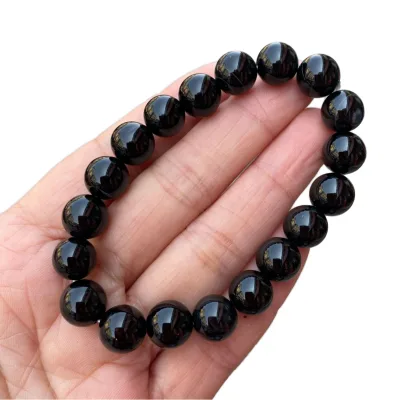
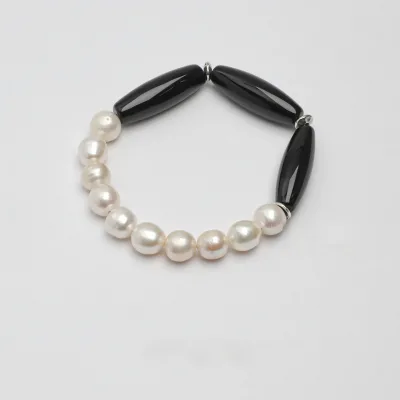
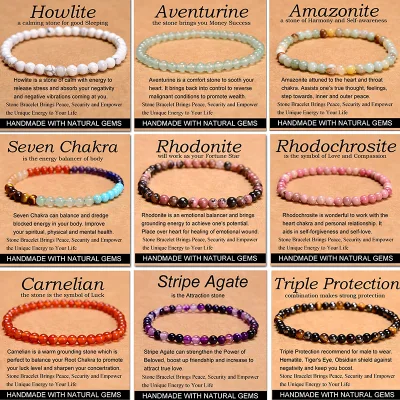
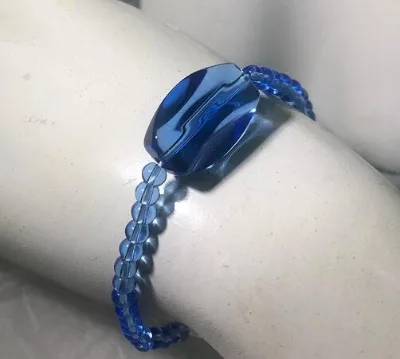


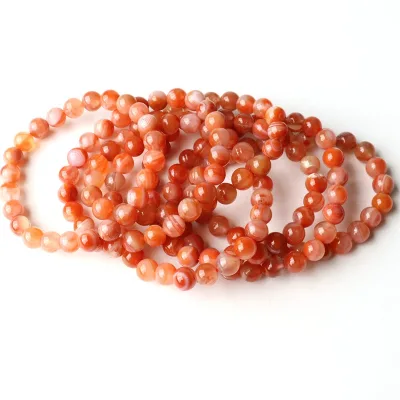
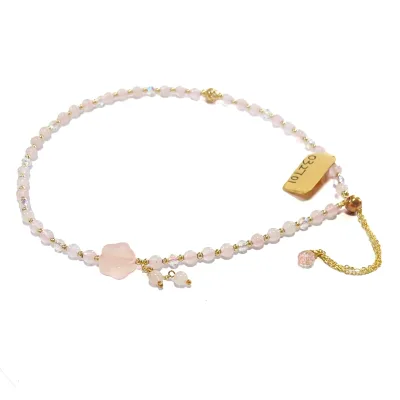
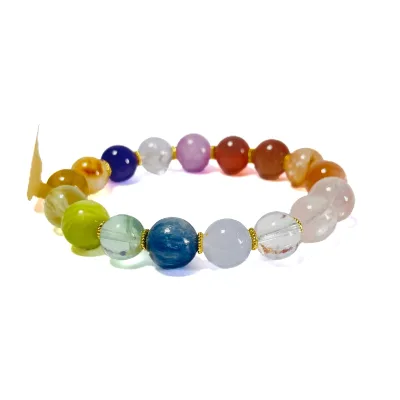
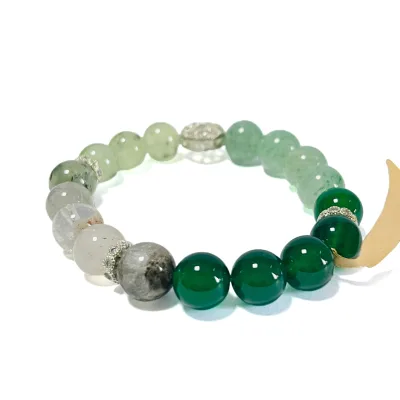


Comprehensive Sourcing Guide
Strategic Sourcing Guide for Natural Onyx Bead Bracelets
The global market for natural stone jewelry has seen a steady increase in demand, driven by consumer interest in sustainable materials and unique aesthetic properties. For procurement professionals specializing in natural onyx bead bracelets, the sourcing landscape requires a nuanced understanding of material authenticity, manufacturing capabilities, and regulatory compliance. This guide synthesizes available market data and industry standards to provide a structured approach for sourcing high-quality onyx bead bracelets. The focus remains on verifying product attributes, understanding cost structures, and establishing robust quality control protocols without relying on unverified supplier claims.
Material Authenticity and Physical Specifications
The foundation of sourcing a natural onyx bead bracelet lies in verifying the material composition. While the core keyword specifies "onyx," market listings often present variations in material descriptions, including stainless steel, jade, beads, and crystal. Procurement teams must distinguish between genuine natural stone and simulated or composite materials. The supplied data indicates that natural stone products are frequently categorized under materials such as "Jade" or generic "Beads," while other listings specify "Stainless Steel" or "Crystal." A buyer seeking natural onyx must explicitly request material certificates or lab reports confirming the stone's origin and composition.
Physical specifications are equally critical for defining the product's market fit. Observed data reveals a wide range of standard dimensions, with specific models listed with standards of "8mm" for bead size and "18CM" for bracelet length. Other entries suggest custom sizing capabilities, with some products noted as "customed." The weight of individual units varies significantly, with observed values ranging from 20g to 25g. These variations impact the perceived value and the shipping costs associated with bulk orders. Buyers should establish a clear specification sheet that defines the acceptable tolerance for bead diameter, bracelet length, and unit weight. For instance, a standard 18cm bracelet with 8mm beads may weigh differently depending on the density of the specific onyx stone used. Ensuring that the supplier adheres to these precise dimensional standards is essential for maintaining product consistency across batches.
Compliance, Safety, and Certification Verification
In the B2B jewelry sector, compliance with international safety standards is non-negotiable. The supplied context highlights several key certifications and safety attributes that are prevalent in the market. Products are frequently described as "Nickel & Lead Free" and "Eco-Friendly," with specific mentions of being "Cadmium Free." These attributes are critical for markets in Europe and North America, where regulations regarding heavy metals in jewelry are strict. The data lists specific certifications such as BSCI, SGS, BV, and Intertek. These organizations provide third-party verification of manufacturing processes and product safety.
When evaluating potential suppliers, buyers must verify that the certifications are current and applicable to the specific product line. A supplier claiming BSCI certification should provide a valid audit report, while SGS or Intertek certifications should cover the specific chemical composition of the beads and any plating used. The data also notes a "Quality Standard" of "Us Standard," which implies adherence to American market expectations for durability and safety. However, buyers should not assume that a single certification covers all requirements. It is necessary to cross-reference the supplier's documentation against the specific regulatory requirements of the target market. For example, if the product is intended for the European market, REACH compliance regarding heavy metals must be confirmed alongside the general "Nickel & Lead Free" claims.
Cost Drivers and Pricing Dynamics
Understanding the cost structure of natural onyx bead bracelets is vital for budgeting and margin analysis. The observed price range in the market spans from $0.46 to $25.59 USD. This significant variance indicates that price is heavily influenced by factors such as material quality, bead size, craftsmanship, and branding. Lower-priced items often correspond to smaller bead sizes, generic packaging, or less rigorous quality control. Conversely, higher-priced items may feature premium natural onyx with consistent coloration, custom designs, or enhanced packaging solutions.
The Minimum Order Quantity (MOQ) is another critical cost driver. The observed MOQ range is between 1 and 300 units. Suppliers with lower MOQs may charge a premium per unit due to the lack of economies of scale, while those requiring higher volumes can offer more competitive pricing. Buyers must balance their inventory needs with the MOQ requirements to optimize cash flow. Additionally, the "Customization" and "OEM&ODM" capabilities listed in the data suggest that custom designs will incur additional costs. These costs typically include mold fees, design time, and setup charges. Buyers should request a detailed cost breakdown that separates the base material cost from customization fees to ensure transparency in pricing.
Typical Applications and Market Segmentation
Natural onyx bead bracelets serve diverse market segments, ranging from casual fashion accessories to formal jewelry. The supplied data indicates that these products are suitable for "Informal Occasions" as well as "Formal Occasions," suggesting versatility in design. Specific use cases include "Decoration," "Health," and "Gift." The "Health" attribute often relates to the metaphysical properties attributed to natural stones, which is a significant selling point in certain consumer demographics. Furthermore, the products are noted as suitable for "Engagement, Gift, Party, Wedding, Other, Halloween," highlighting their adaptability for various events.
The target markets identified in the data include Europe, North America, and Russia. These regions have distinct preferences regarding style and material. For instance, the "Natural" and "Simple" styles are popular in Western markets, while "Multicolour" and "Irregular Shape" designs may appeal to niche fashion segments. Understanding the specific occasion and target demographic is essential for selecting the right product variants. A bracelet designed for a formal wedding may require higher-quality polishing and consistent bead sizing, whereas a casual gift item might prioritize unique shapes and vibrant colors. Procurement strategies should align product selection with the specific occasion and regional preferences of the end consumer.
Supplier Evaluation and Manufacturing Capabilities
Selecting the right supplier requires a thorough evaluation of their manufacturing capabilities and business practices. The data indicates that suppliers are located primarily in China, with specific mentions of Zhejiang and Yiwuzhejiang as key production hubs. These regions are known for their extensive jewelry manufacturing ecosystems. When evaluating suppliers, buyers should verify their "OEM&ODM" acceptance status, as this indicates the ability to customize products according to specific brand requirements.
The packaging methods listed, such as "Carton," "One Psc with One OPP Bag," and "Eachone with OPP Bag," provide insight into the supplier's attention to detail. For high-value items, individual packaging is often required to prevent damage and enhance the unboxing experience. Buyers should assess whether the supplier's standard packaging meets their brand's presentation standards or if additional customization is needed. Additionally, the "Main Market" data suggests that experienced suppliers are already familiar with international shipping and compliance requirements. However, buyers must still verify the supplier's ability to handle logistics, including lead times and shipping reliability, to ensure timely delivery.
Quality Control and Long-Term Procurement Strategy
Establishing a robust quality control (QC) protocol is essential for maintaining product integrity. The observed attributes, such as "Nickel & Lead Free" and "Eco-Friendly," must be validated through regular testing. Buyers should implement a QC plan that includes random sampling and third-party testing for heavy metals and material composition. The "Testing" attribute in the data confirms that suppliers often provide test results, but these should be verified independently to ensure accuracy.
Long-term procurement considerations involve building a sustainable relationship with suppliers. This includes negotiating favorable terms for volume discounts, ensuring consistent quality across batches, and maintaining open communication regarding design changes. The "Customization" and "OEM&ODM" capabilities suggest that suppliers can adapt to changing market trends, which is crucial for long-term success. Buyers should also consider the environmental impact of their sourcing decisions, prioritizing suppliers who demonstrate a commitment to sustainable practices and ethical manufacturing. By focusing on these long-term factors, buyers can secure a reliable supply chain that supports their brand's growth and reputation in the competitive jewelry market.
Comparative Analysis of Product Attributes
To facilitate decision-making, the following table summarizes key product attributes observed in the market data. This comparison highlights the variability in specifications and helps buyers identify the most suitable options for their specific needs.
| Attribute | Observation 1 | Observation 2 | Observation 3 |
|---|---|---|---|
| Material | Stainless Steel | Jade | Beads (Natural Stone) |
| Bead Size | 8mm | 6mm | Custom |
| Bracelet Length | 18CM | Custom | 7" |
| Weight | 20g | 25g | Variable |
| Color | Green | White | Multicolour |
| Style | Natural | Simple | Irregular Shape |
| Certification | BSCI, SGS, BV, Intertek | SGS, BV, Intertek | BSCI, SGS, BV, Intertek |
| Safety | Nickel & Lead Free | Lead Free, Nickle Free, Cadmium Free | Nickel & Lead Free |
| MOQ | 1-300 | 1-300 | 1-300 |
| Packing | Carton | One Psc with One OPP Bag | One Piece One OPP Bag |
This table illustrates that while there is a common thread of safety and certification, the physical attributes vary widely. Buyers must carefully match these attributes to their product requirements to avoid discrepancies in the final shipment. By adhering to the guidelines outlined in this guide, procurement professionals can navigate the complexities of sourcing natural onyx bead bracelets with confidence and precision.
FAQs
What materials are used for natural onyx bead bracelets?
Natural onyx bead bracelets are typically crafted from genuine stone materials like jade or generic beads, though some listings specify stainless steel or crystal. Buyers must verify material authenticity through certificates to ensure the product matches the natural stone requirement.
Which certifications ensure safety for these bracelets?
Products often carry certifications from BSCI, SGS, BV, and Intertek to verify manufacturing processes and safety. These documents confirm that items are nickel and lead free, meeting strict regulatory standards for markets in Europe and North America.
How does the MOQ affect pricing for orders?
The minimum order quantity ranges from 1 to 300 units, directly influencing the unit price. Lower MOQs may result in higher per-unit costs due to limited economies of scale, while larger volumes typically secure more competitive pricing tiers.
Can suppliers customize designs for this product?
Yes, customization is available with OEM and ODM services accepted by many manufacturers. Buyers can request specific styles, bead sizes, or packaging solutions, though custom designs may incur additional setup fees and require longer lead times.
What are the standard dimensions for these bracelets?
Standard specifications include bead sizes of 8mm or 6mm and bracelet lengths of 18cm or 7 inches. Some suppliers offer custom dimensions, but buyers should confirm tolerances to ensure consistency across batches for their specific product requirements.
Where are the primary manufacturing locations for these items?
Production is concentrated in China, with key hubs located in Zhejiang and Yiwuzhejiang. These regions host extensive jewelry manufacturing ecosystems capable of handling both standard and customized orders for international markets.
What packaging options are available for bulk orders?
Common packaging includes cartons, individual OPP bags, or one piece per OPP bag depending on the supplier. Buyers should specify their preferred packaging method to ensure products arrive undamaged and meet brand presentation standards.